Super Spi(c)es – Clove

Clove tree

Cloves are the aromatic flower buds of a evergreen tree in the family Myrtaceae, Syzygium aromaticum. They are native to Indonesia. The name cloves come from Latin “clavus,” meaning Nail , as cloves often look like small nails. They are used as whole or powdered form as spice in cooking and in products like toothpaste, cosmetics etc. They have many heath benefits and have been used in ancient Indian and Chinese medicine.

Clove oil has been used widely to maintain good oral health. They can have a good effect on plaque and gingivitis and help reduce inflammations.  Study conducted on mice suggests that clove extract and nigericin can help to reduce insulin resistance. Cloves and nigericin were found to increase the uptake of sugar from the blood into cells, increase the secretion of insulin, and improve the function of cells that produce insulin. Other studies also suggest that mice fed with clove powder showed lower blood glucose level that the group without it.

Clove also has cancer fighting properties. Eugenol is the main bioactive component found in clove. It is a good source of Manganese.

Side effects of clove oils are – may cause skin, eye, and respiratory irritation, or an allergic reaction on the skin. It is also flammable and could be fatal if it is swallowed and goes into the airway.

My References :

https://www.medicalnewstoday.com/articles/320768

Oral Health to Overall Health

“For bacteria, the mouth is the entrance to the digestive and respiratory tract.”, says the Dean of Arizona State School of Dentistry and Oral Health. “Studies have suggested that oral bacteria and the inflammation associated with periodontitis might play a role in some diseases. These include: endocarditis, cardiovascular disease, complications during pregnancy and pneumonia”. This helps us understand how important our dental health is.

Oral health care is important in the early stages of a child’s life for protection against infections and diseases. The early decay of teeth can create problems including painful gums, difficulty with eating, and inflammation in the gum area. Maintaining the proper habits of brushing and flossing and having proper intake of fluoride are steps towards having good dental health. Fluoride is a mineral in dental products which hardens the tooth enamel and reduces the risk of cavity. The daily required fluoride that benefits children’s health can be acquired by drinking tap water. The routine of brushing for 2-3 minutes daily and flossing at least once a day goes a long way reducing interdental plaque located in the mouth. Visiting the dentist should be an action that occurs twice a year for checkups on the dental health of individuals. Setting habits early prevents decay and disease in the future and positively contributes towards good oral health and overall health.

Traditional medicines were more focused on preventing the teeth decay and infection. An interesting fact is that Asian traditional medicines consider that examination of the tongue is important for diagnostic purposes as toungue harbors 50% of the bacteria. Some of the day to day items associated with Oral health are mint, lemon, baking soda, clove, activated charcoal, oil pulling, Azadirachta indica (Neem).

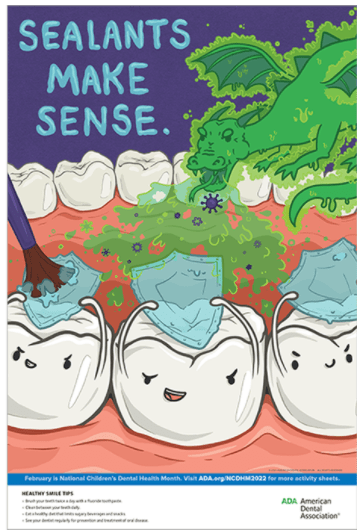
ADA poster 2022

Each February, the American Dental Association (ADA) sponsors National Children’s Dental Health Month to raise awareness about the importance of oral health. The material has been shared across millions of people across the country to raise awareness.

My References :

https://www.cdc.gov/oralhealth/basics/index.html
https://gently.curaden.com/the-mouth-is-the-gateway-to-the-whole-body/

https://www.ada.org/resources/community-initiatives/national-childrens-dental-health-month

Covid and Oral Health