Epigenetics is the study of how behavior and environment create change in gene function. Cells control gene activity without changing DNA sequence. Changes in epigenetics structure regulate whether genes are on or off. Types of epigenetic changes include DNA methylation, Histone modification, and Non-coding RNA.
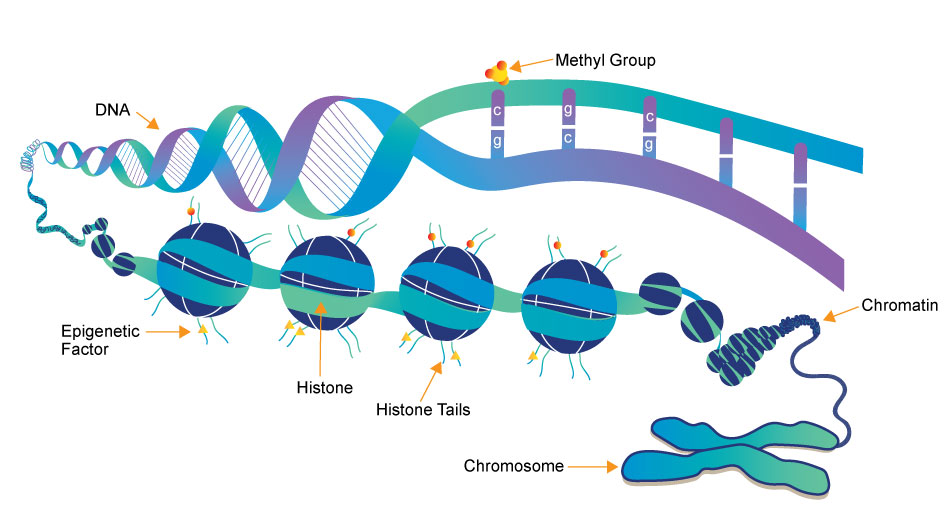
DNA methylation is when a chemical group is added to DNA blocking proteins that reads the gene. When a chemical group is removed in demethylation the gene is off and in methylation the gene is considered on. With histone modification, DNA wraps around histones making sure proteins that read these genes cannot access the DNA. The addition of chemical groups determine if a gene can be changed to wrapped or unwrapped. Non-coding RNA is when instructions from DNA are needed to form coding RNA and non-coding. This is needed for the creation of proteins and helps control gene expression.

Errors in the epigenetic process such as error in modification and failure to add a chemical group to a histone, can result in abnormal gene activity. Cancer, degenerative disorders, and metabolic disorders, are effects of epidemic errors.
References:
https://www.cdc.gov/genomics/disease/epigenetics.htm
https://medlineplus.gov/genetics/understanding/howgeneswork/epigenome/

 Journey into the World of Life Science